
Our science
Cancer induces changes in blood that we are learning to read.
Our approach doesn’t look for the tumor itself—it reads the body’s response to it, setting us apart from conventional liquid biopsy approaches looking for circulating signaling directly derived from the tumor, such as proteins, metabolites or nucleic acids. Cancer is not an isolated event. As a tumor develops, it interacts continuously with the surrounding tissue and with the body’s immune system.
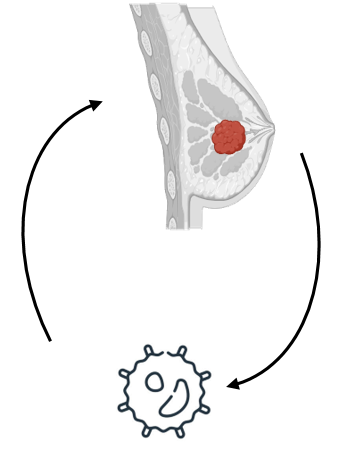
● The immune system as a natural cancer detector
Our research showed that cancer induces reproducible molecular changes in immune cells — even when the tumor itself is small. By listening closely to these early immune signals through cutting-edge technologies, we identified a molecular immune fingerprint associated with breast cancer. This discovery provides the biological foundation for our lead early breast cancer detection program.
We translate this immune fingerprint into a molecular blood test using PCR-based analysis and computational interpretation. Rather than looking only for material released directly by the tumor, our approach reads the body’s response to cancer.
“About Switzerland” presented our technology in Autumn 2025.

● Nanosensor technologies for nucleic acids detection
Besides its flagship immune fingerprint solution, XEMPERIA is leveraging as well nanosensors for developing other solutions with the aim of rapid, sensitive, and cost-effective detection of circulating RNA/DNA molecules.
At Xemperia, we believe early detection isn’t just science – it’s hope. And we’re turning that hope into reality.
Interested in knowing more?
- © 2025 Xemperia. All rights reserved | Imprint | Design: ZebraZbinden | Development: FRESCHI IT